Showing posts with label Anglo Saxon. Show all posts

Exam Study Guide: The Anglo-Saxons and Co.

Review for Quiz - Thanes and Peace-weavers, here is a study guide for your reviewing pleasure (test is on block days - Wed and Thurs of this week).
  • Beowulf - plot, characters, thematic developments (see study guide) 
  • The Anglo-Saxon historical overview (you should have already opened the document in Notability, but if you don't have it, go to Google Classroom and get it there; it's entitled "Brit Lit - Historical Eras").
    • Pay specific attention to the following things:
      • What the Romans brought to the British Isles
        • Central government
        • strong infrastructure - roads, aqueducts, walls  
      • Anglo-Saxons
        • Religion
        • Tribal system of government (decentralized)
        • Monasteries as centers of learning 
        • Alfred the Great - why was he so great?
        • Scop - an Anglo-Saxon poet, a "shaper"   
  • Old English Verse and imagery below
      • imagery - language that appeals to the senses
        • tactile - touch
        • visual - sight
        • aural - sound
        • gustatory - taste
        • olfactory - smell
        • kinesthetic - movement   
  • GUM: 
    • sentence types
    • clauses
    • subjects and verbs (or predicates) 

Tuesday, 9/9 - More Anglo-Saxon Background

  • 3PO 
  • GUM: Begin writing down the Lit Terms posted on the right hand column for Unit 2: The Anglo-Saxon Era
  • Anglo-Saxon Intro - HW check
  • Begin Beowulf?

HW: 
  1. If there is a particular college that interests you, please bring a snapshot of their personal statement prompt with you to class on block day.


Block, 9/4 & 5 - Anglo-Saxon England

Sutton Hoo helmet, PA
Reconstruction of an Anglo-Saxon helmet

  • 3PO
  • GUM (Grammar, Usage, Mechanics): Write out the following sentences and identify 1) the verb(s) with a double underline and 2) the simple subject(s) with a single underline. 
    • Helpful hint: find the verb(s) and then ask "Who or what is/are doing/being?" The answer to that question should give you the subject(s).
      1. The viking ship pitched violently on the enraged waters of the North Sea.
      2. How has tiny England had such a huge legal and political impact on many countries?
  • Review J1: Who Am I?

Tuesday, 10/1 - Don Your War Gear

  • P&P 
  • Try to make some serious headway today, for block day will be the day of reckoning, the day to stand firm, the day you face the ICE dragon. You should have all your materials ready by the end of class today, which I will collect. The ones that I have are the ones you will get to use, no others.  

  • The THESIS - Remember that your thesis should answer at least the first two of the following questions; for a rollicking good time and grade, however, take a stab at the why? question, too:
  1. What? (THEME) - What is the author saying about some aspect of life? 
    1. What is he saying about the nature of worldly wealth? Any of the following might be themes in Beowulf:
      1. Worldly wealth doesn't ultimately satisfy
      2. Worldly wealth is transitory
      3. Worldly wealth produces unnecessary conflict and violence 
  2. How? (LIT ELEMENTS) - How is the author saying it? What literary elements does he use to show the theme you've identified? (e.g. kennings, biblical allusions, typologies, character, imagery, contrasts, setting, motif, etc.)
    1.  How does the Beowulf author address the nature of worldly wealth?
      1. He uses different imagery (burial, decay, violence)
      2. He uses biblical allusions (choose the better part, proverbs of Solomon to son)
      3. He uses different characters (Hrothgar, last of a high-born race, King Heremod, dragon)
      4. He uses the ubi sunt motif in several key places
  3. Why? - This is perhaps the most difficult of all because you are trying to consider broader cultural, theological, philosophical considerations the author is addressing. 
    1. Why does the Beowulf author use burial imagery to show the transitory nature of worldly wealth?
      1. To warn future Anglo-Saxon kings not to build their kingdoms on false foundations . . .
      2. To quell the ubiquitous violence so prevalent in his culture . . . 
      3. To point his readers to eternal life and real wealth . . .
Based upon the considerations above, here follow some sample thesis statements (with the why, how, and what in parentheses):
    1. (Why?) To warn future Anglo-Saxon kings not to build their kingdoms on false foundations, the Beowulf author (How?) uses images of violence, burial, and decay to show (What?) that worldly wealth is transitory.
    2. (How?) Using several biblical allusions and types, the Beowulf author maintains (What?) that worldly wealth is both unsatisfying and transitory; this he does (Why?) to point his readers to the satisfying wealth of eternal life.
    3. (Why?) To quell the ubiquitous violence so prevalent in the viking culture of his predecessors, the Beowulf poet (How?) uses unwise kings, a dragon, and the imagery of violence and burial to (What?) show how worldly wealth foolishly gained and hoarded produces unnecessary conflict, violence and, ultimately, death.


HW: 
  1. Continue to browse Beowulf and mentally prepare for your ICE. You will have all class period tomorrow to prepare.
  2. Reno's classes will begin reciting "Caedmon's Hymn" on Wednesday (tomorrow). It's do or die time, baby. Those who wish to recite need but ask, and their wish shall be granted. Those who shrink back will most likely be called to the heat of battle. Work out your Anglo-Saxon lungs and perform like a scop.
  3. We will be having a test over the Anglo-Saxon period mid-week next week. I will post a study guide. 

Monday, 9/30 - Dragons, Baggins, & Beowulf

    A barrow (burial mound)
  • P&P 
  • Check full RD of CWP. We will work on them toward the end of the period.
  • We now encounter Beowulf's wintering into wisdom, which means he has been getting mail from the AARP. If you don't know what that is, ask your grandparents. He's still a hoss though and must face another monster . . . this time, a Smaug look-alike. Enjoy our hero's last barrow-battle. Yes, he dies, but he goes down with fireworks blazing. Enjoy the show.

HW: 
  1. (Wed) Caedmon's Hymn recitation
  2. Bring your J4 - Beowulf prompts to class every day this week. You will be working on compiling notes for an ICE this block day. Any handwritten notes you take you may use on block day.
  3. Turn in CWP final copy by block day of this week and submit a copy to turnitin.com through online course (if turnitin.com is working for us; it hasn't been available yet this year).

Friday, 9/20 - Beowulf journal prompts

  • P&P
  • Today is a little work day. Dig the assignment below; consider. Also, take a bit of time and do a little sketchy-sketch on your Grendel Art assignment. Have fun!
J4: Beowulf Prompts: Take a look at the following journal prompts and select two of them in order to compile information for a possible essay. Consider this assignment the early stages of research. When reading, you must understand not only the plot but also be asking yourself questions that might lead you to an original insight about a work, a thesis statement. We will check your journal (your textual evidence and your own thoughts) next Wednesday.

1. What is the Beowulf author doing with all his biblical allusions? Keep track of them and figure out his purposes for using them. Why does he include them? What do they add to the tale?

2. What is the Beowulf author doing by including a bunch of epic tales within this epic tale? Are these merely random insertions to meet an ancient Anglo-Saxon CWP word count or to confuse modern high school students, or do they play larger structural or thematic roles relating to the work as a whole? Consider the tales' moral content, their typologies, and the atmosphere they establish.

3. What is the Beowulf author saying about the nature of good and evil? Is evil merely something in the heart of creatures lurking "out there" in the wild, or is it something more complex than beast and dragon versus man?

4. Beowulf is full of contrasts. What are some of the most important ones, and what is the author telling his readers/listeners with these contrasts?

5. What is the Beowulf author's view of the goodly king? A goodly thane (warrior)? Is there a difference between the two? What is it?

6. How is Beowulf a tale that attests to a world in religious transition (from pagan to Christian), and what might the author be saying about it?

7. Beowulf addresses the subject of peace in a culture characterized by war. Address the various attempts at establishing peace and also take a stab at the author's view of whether or not this peace is ever attainable.

8.  Where do we see the seeds of English chivalry sown and sprouting through this Anglo-Saxon take on a Geatish legend?

HW: 
  1. (Monday) Grendel Art is due. 
  2. (Wednesday) J3 - Beowulf Prompts is due

Wednesday, 9/11 - Defending the Country from Maurauders Day

  • P&P
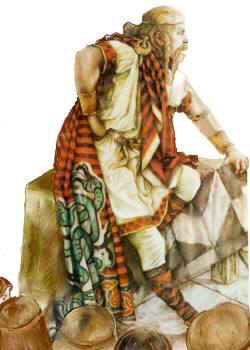
an Old English Scop has unlocked his word-hord before his community
Beowulf considers the University of Heorot's prompt

  • Yesterday we took a few moments to look at some college prompts and the Common App prompts. Sometime today and tonight, search for a couple of prompts to which you'd like to respond, and be sure to make selections that consider your future. We will be spending a bit of time on block day looking at some delectable and fusty examples of student college application essays of the past. The college essay is your opportunity to unlock your own word-hoard, to open your mouth and preen your plume, to become a scop, a shaper of a story that will sing the glories of character, all to enable you to enter the mead hall of your desires.
  • Now . . . though many consider our hero pure beefcake, Hweat! Listen as Beowulf unlocks his word-hoard . . . take note.
  • Also, block day will be a mead-hall celebration, so bring your battle-tackle, war-gear, and plenty of food and drink. Bring it!

HW: J2 - The College Prompt
  1. Select two prompts to bring to class tomorrow (block day). 
  2. Write them both out in your binder 
  3. Consider whether a descriptive or a narrative essay (or a combination of both) will best help you address each  prompt.

Monday, 9/10 - Beowulf steps into the telephone booth

  • P&P 

1. Be sure to include the prompt when turning in any college essay writing piece.

2. Use MLA in your heading for work turned in.


3. Consider opening
in medias res (in the middle of things), like Homer (though an epic may not follow).

4. Keep the active tense. Vary your sentences (do five sentences open with "I" or "My"? Change it). Be specific, avoid general statements about yourself and others.


5. Look for the arc of negative to positive or positive to negative to positive.


6. Colleges are more interested in you than people you'd rather talk about. 


  • Beowulf

HW:  work on narrative essay

Monday, 9/9 - Beowulf

https://mail-attachment.googleusercontent.com/attachment/u/0/?ui=2&ik=c7e63c68c5&view=att&th=141033b32813da23&attid=0.1&disp=inline&safe=1&zw&saduie=AG9B_P9Oxr-sAllKIUmd1lFla9QV&sadet=1378738797801&sads=lzMdfSLMs0a3cwpQ_h88wpaJ9c0&sadssc=1
The Scandinavian Setting for Beowulf
  • P&P
  • Review Anglo-Saxophone mnemonic devices
  • Did you look for your college essay prompt? Tomorrow we will begin discussing the college essay. 
  • Beowulf - bee mindful ; )
    • As you read, keep in mind that Beowulf was written as a Geatish story-manual on what it means to be a good king, what it means to be chivalrous. Keep your eyes on places in the text where you see this explicit ("Behavior that's admired is the path to power among people everywhere.") and where implicit (Beowulf not grasping the throne from the rightful heir even when it's "lawfully" offered him).   
    • Beo-wulf - possibly a kenning for "bee-wolf," "bee-hunter." Any guesses?
    • Heorot - hart
    • Unferth - un-peace  
HW: bring college prompt with you to class tomorrow. 

Block, 10/4-5 - ICE and Test Prep Day

*P&P

*Poetry Recitation (mead hall celebration!) - Let's hear you scops sing . . . just remember what happens when Grendel hears songs about creation . . . be on your guard.

*ICE - When you're finished, underline your thesis and topic sentences, staple a rubric to the front of the essay, write your name on the back of the last page, and turn it in.

*Anglo-Saxon test prep time . . . 
  1. Historical Overview
    1. Link or use the document you got from Focus
    2. ICRAVN (inhabitants of the British Isles)
    3. MCGVR (general history of Anglo-Saxon England by century)
  2. Anglo-Saxon literary elements
  3. Beowulf - plot, characters, kennings
  4. Lit terms - on blog and in your binder 

*If we have extra time, kick back and enjoy this video to introduce you to Medieval England and the author of Sir Gawain and the Green Knight (commonly known as the Pearl Poet).

HW: On Monday we will be having a test on Anglo-Saxon England and Beowulf. I will post a study guide for you on the blog this weekend.


Wednesday, 9/26 - The Finish (Swedish?) Line

*P&P

*Today (perhaps tomorrow for some) we conclude Beowulf, as Beowulf expires, only to have the glutton element taste his bone-house. It's a moving scene, with the Geat king dead, consumed, and buried; his people wailing and surrounded on all sides by vengeful Swedes and Frisians. Don't be frustrated at this non-Disney conclusion; Walt wasn't in the picture then, nor are his pictures exactly the sort of inspiration that would have touched the Anglo-Saxons. So . . . be careful as you critique. Instead, consider: does this conclusion remind you of any other scenes in this glorious narrative? Why would the author conclude on such a heavy ubi suntish note? Where have all the heroes gone?

HW:
  1. CWP due block day 
  2. J3 due tomorrow. Beowulf is available on Focus. Use it to gather textual details to support what will become a thesis and an essay. I want bits of quote and line number. 

Monday, 9/24 - CWP RD and Beowulf cont'd

*P&P

*CWP Rough Draft - check for MLA and thoroughness

*Beowulf and journal . . . charge!!! Remember to gather textual evidence to support your J3's two areas of interest. We will check this journal at the end of the day on Wednesday. 

HW: 
  1. CWP final draft due anytime between now and block day. You must turn in a hard copy and also submit a copy to turnitin.com through Focus (the online course). If you are absent, you must turn in an electronic copy or the essay will be considered late. Also, if MLA is not perfect before the final day, it will also be considered late. Please be proactive and have your teacher check it early.
  2. J3 due Wednesday at the end of class

Unit 2: Anglo-Saxons (Beowulf)

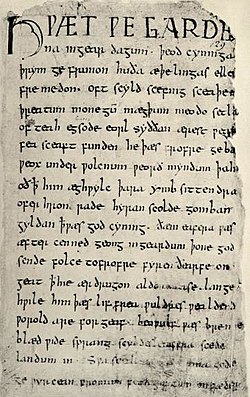
First Page of Beowulf

Anglo-Saxon Riddles

Bilbo and Gollum (Smeagol) Riddle Jousting
Perhaps some of you will remember a familiar name, J. R. R. Tolkien, and his delightful work The Hobbit, in which a smallish, Englishy creature named Bilbo finds himself in a fusty cave, fighting for his life by riddle-jousting with the hungry-for-hobbit Smeagol. Tolkien took so much of what he wrote from Anglo-Saxon culture, riddles not excepted. 

Why did Anglo-Saxons love riddles, word games? Perhaps because hunting for treasure was in their blood, as was beautifully wrought treasure itself. Poetry is a kind of riddle, a word-treasure to admire, and in the struggle for and discovery of its meaning doth its beauty shine forth ; )

As you try your hand at these Anglo-Saxon riddles below, keep in mind that the answers to these riddles are generally concrete things (a bird, a castle, an egg) as opposed to abstract ideas (love, joy, hate).

Enjoy!


Anglo-Saxon Mnemonic Devices

*Here are several mnemonic (memory) devices to help you remember important people groups and historical phases of the isles up to the Norman Invasion in 1066, when English and its language shifted from its Germanic roots to becoming French fried.