Showing posts with label ICE. Show all posts

ICE - TGD Prompts

Please write a five paragraph essay addressing  of the following prompt:
  1. Discuss how and why C. S. Lewis' Great Divorce transfigures (changes) traditional/popular notions of heaven and hell, and what these transfigurations tell us about human nature
*DO NOT write your name on the front of your paper; write it on the back of your essay
*Only write on the front of your paper
*Plan your essay for at least three minutes
*Underline your thesis statement
*Underline your topic sentences

Monday, 1/8 - The Restoration (of the school year)

Shakespeare's prima donna
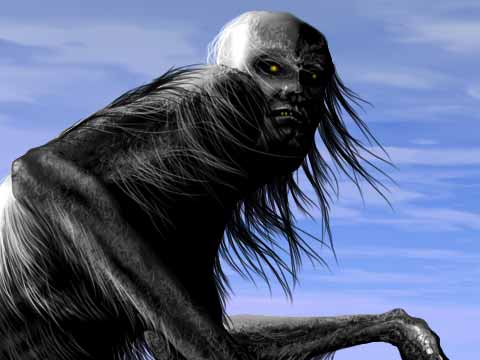
Welcome back, all ye courtiers! I know you're chomping at the bit to begin reading the historical background for the Restoration and the 18th Century, but before we get there, we need to back up just a bit to John Milton, the last great Renaissance poet and Puritan, and then back up once more to William Shakespeare, the greatest poet . . . all to do a comparison of Milton's "Satan" in his epic Paradise Lost and the villain Don John in Shakespeare's comedy Much Ado About Nothing. So that means we dig into super heavy text for the next couple of days and then begin a sweet cinematic version of Shakespeare's comedy. Hey, it must be a comedy if Keaneu Reeves is attempting Shakespeare! "Uh, yah, Trinity, I mean, Claudio."

So here's what we have for today's agenda:


  • Begin this segment from John Milton's Paradise Lost (lines 1-270) but read the following before beginning:

Your job over the next week or so is as follows: observe and record similarities between Satan and Keaneu, I mean, Don John in order to prepare for a THICE. Consider the villains' motives, words, thoughts, attitudes, actions, dwelling-places, victims, and arch-enemies. We don't think you'll find many physical similarities, but you just might surprise us.

HW: Finish copying down all nails and lit terms.

Tuesday, 10/1 - Don Your War Gear

  • P&P 
  • Try to make some serious headway today, for block day will be the day of reckoning, the day to stand firm, the day you face the ICE dragon. You should have all your materials ready by the end of class today, which I will collect. The ones that I have are the ones you will get to use, no others.  

  • The THESIS - Remember that your thesis should answer at least the first two of the following questions; for a rollicking good time and grade, however, take a stab at the why? question, too:
  1. What? (THEME) - What is the author saying about some aspect of life? 
    1. What is he saying about the nature of worldly wealth? Any of the following might be themes in Beowulf:
      1. Worldly wealth doesn't ultimately satisfy
      2. Worldly wealth is transitory
      3. Worldly wealth produces unnecessary conflict and violence 
  2. How? (LIT ELEMENTS) - How is the author saying it? What literary elements does he use to show the theme you've identified? (e.g. kennings, biblical allusions, typologies, character, imagery, contrasts, setting, motif, etc.)
    1.  How does the Beowulf author address the nature of worldly wealth?
      1. He uses different imagery (burial, decay, violence)
      2. He uses biblical allusions (choose the better part, proverbs of Solomon to son)
      3. He uses different characters (Hrothgar, last of a high-born race, King Heremod, dragon)
      4. He uses the ubi sunt motif in several key places
  3. Why? - This is perhaps the most difficult of all because you are trying to consider broader cultural, theological, philosophical considerations the author is addressing. 
    1. Why does the Beowulf author use burial imagery to show the transitory nature of worldly wealth?
      1. To warn future Anglo-Saxon kings not to build their kingdoms on false foundations . . .
      2. To quell the ubiquitous violence so prevalent in his culture . . . 
      3. To point his readers to eternal life and real wealth . . .
Based upon the considerations above, here follow some sample thesis statements (with the why, how, and what in parentheses):
    1. (Why?) To warn future Anglo-Saxon kings not to build their kingdoms on false foundations, the Beowulf author (How?) uses images of violence, burial, and decay to show (What?) that worldly wealth is transitory.
    2. (How?) Using several biblical allusions and types, the Beowulf author maintains (What?) that worldly wealth is both unsatisfying and transitory; this he does (Why?) to point his readers to the satisfying wealth of eternal life.
    3. (Why?) To quell the ubiquitous violence so prevalent in the viking culture of his predecessors, the Beowulf poet (How?) uses unwise kings, a dragon, and the imagery of violence and burial to (What?) show how worldly wealth foolishly gained and hoarded produces unnecessary conflict, violence and, ultimately, death.


HW: 
  1. Continue to browse Beowulf and mentally prepare for your ICE. You will have all class period tomorrow to prepare.
  2. Reno's classes will begin reciting "Caedmon's Hymn" on Wednesday (tomorrow). It's do or die time, baby. Those who wish to recite need but ask, and their wish shall be granted. Those who shrink back will most likely be called to the heat of battle. Work out your Anglo-Saxon lungs and perform like a scop.
  3. We will be having a test over the Anglo-Saxon period mid-week next week. I will post a study guide. 

Block, 3/21-22 - P&P ICE


  • P&P 
  • If you have not yet taken the P&P exam, you must see me asap.
  • ICE requirements - your five paragraph ICE must consist of the following:
    • introduction
      • a hook of some sort
      • underlined title of Austen's novel
      • underlined thesis
      • underlined preview of your main points
    • Three body paragraphs - for each paragraph you must have . . .
      • an underlined topic sentence
      • three supporting details from the text
        • with one of those supporting details being a properly integrated quote with correct MLA formatting
      • commentary on the supporting details
      • concluding sentence that ties the back into the TS (topic sentence)
    • Conclusion 
      • restatement of the thesis
      • tell us what's so important about your thesis 
HW: take a break

Sample Essay - Hamlet 4


             Prompt: Two Associated Characters

            How would you react if you found out that your father was killed by someone who is close to you? Would you seek revenge or go crazy? In the play of Hamlet by W. Shakespeare, there are two young people who lose their fathers and in result go slightly crazy. Hamlet who is the son of the late King Hamlet and Ophelia the daughter of Polonius both struggle emotionally and physically due to their father’s death. In the tragedy of Hamlet, Hamlet and Ophelia are both controlled by their fathers, go crazy when their fathers are killed, and think about taking their own lives as a result of these deaths.

Sample Essay - Hamlet 3


 Prompt: Two Associated Characters

Shakespeare purposely relates Ophelia to her "boyfriend." Hamlet. Shakespeare
does this to show that those who listen to people in his/her positions who tell you to do
deplorable things are a bad influence. Hamlet goes crazy as he ponders on killing the
King when he listens to the ghost. Ophelia goes crazy as she listens to the evil King
Claudius and her father. By using a chain of events and different characters of royalty,
Shakespeare associates Ophelia and Hamlet to show the audience the consequences
of the following bad advice, (seeking) revenge, and (failing to control) emotions in one's
life.

Sample Essay - Hamlet 2


Prompt: Compare-Contrast Two Characters Shakespeare Associates

"I will speak daggers to her," he said. Hamlet I'd a man of emotion. He always
makes thing(s) so much more dramatic than they have to be; however, in the end,
Hamlet is a Shakespeare tragedy! Hamlet was written in the late 1500s, but it has bee
widely accepted in different eras as a wonderful piece of art. Shakespeare uses Hamlet
and Fortinbraus in order to demonstrate the effects of vengance by juxtaposing a life of
revenge with one of self-restraint, as well as their results.


Sample Essay - Hamlet 1


Prompt: The Divided Body


In Hamlet, Shakespeare illustrates a very divided family. Hamlet's uncle,
Claudius, recently murdered the king his brother- Hamlet's father. Hamlet is
visited by his father's ghost who informs him that Claudius murdered him to
obtain the crown. Shakespeare illustrates the tension that rises from Hamlet's
knowledge to show family dysfunctionality in its worst so that he may compare a
dysfunctional family as a "divided body" to a dysfunctional or divided relationship.
He achieves this comparison with the course the drama takes.


Tuesday, 10/2 - Trouncing the tarn-hag

*P&P

*Reno's classes need to check the new and improved expectations that he posted yesterday.
 
*Now . . . beat down that monstrous tarn-hag of an essay that has you pinned on your back. Hope you wore your mithril today; her knife is sharp.

HW: prepare for THICE to be written on block day. 

Monday, 10/1 - Grappling with Grendel

*P&P

*Battle the monster, er, I mean, work on your THICE (Take Home In Class Essay). The final draft we will write in class on block day. Since you are not being timed on this one, you should be shooting for at least eight to ten sentences per body paragraph for a five paragraph essay and twelve to fifteen for a four paragraph essay. We'll be looking for some nice development, exceptional support, and impeccable structure and style.

*Please use your time well this week. You will have the full class period each day. If you don't use your time well, you will write an ICE during advisory . . . using a prompt of my choosing. So work wisely.

Cheers!

HW: THICE to be hand-written in class on block day.

Block, 9/25-26 - Nice ICE

*P&P

*Bedford 19 (Fragments) and 20 (Run-ons). Review rules and then do Ex 19-1 (a-e) and 20-1 (a-e). While you do this work, please have your J3 out. Reno's Wiglafs will show their mettle by displaying their tricked-out battle tackle (J3 quotes). The tail-turner's (those who failed to do J3) will hide in the trees, feigning courage . . . and quotes. Those battle-dodgers without a stockpile of quotes will spend time gathering gold from Beowulf-barrow. Get into the text when I give you writing time today.

*Schwager's thanes finish Beowulf. Fight the good fight. Stab the dragon. (P. S. Go for the flank . . . steak.)

Please read the ICE (the expository essay) below and answer the questions that follow. I then want to hear your thoughts. Here is an example of a nice ICE from your colleagues in English 400 this year. There were a number of others, but this student was absent on the day of ICE return, so I still had it on hand, and I forgot to ask for some of the really good ones back. Dig.


Block, 8/30-31 - ICE on TGD

*P&P

*Finish reviewing TGD . . . any questions at all?

*Review Lit Analysis and essay format

*Review Reno's ICE rubric

*ICE on TGD (45 min.)

Reno's ICE Rubric