The Second Generation Romantic Poets

    Percy Bysshe Shelley
    Percy Bysshe Shelley (1792–1822)
  • Percy Shelley (bio)


  • John Keats (bio)


With someone you have not yet had the opportunity to work, read each of the bios and poems above, taking notes on the following (when interpreting, DO NOT use the internet other than a dictionary, the bios, and the links I've provided below):

  1. Identify the genre and/or form of poetry
  2. Paraphrase each poem (short, more of a summary)
  3. Write out what might be the theme for each poem (a one sentence overview that states what the author is uniquely saying in this work about some aspect of life)
  4. How is he saying it? Identify two literary elements you see at work in each poem.
  5. What you believe to be generally romantic about each poem and how it is different from the first generation romantic poets.

You May Wish to Pray for our Local Law Enforcement

  • Pray for the families of Butch Baker and Elizabeth Butler...who lost a parent.
  • Pray for the safety and blessing of local law enforcement: Manny Solano (Watsonville), Rudy Lopez (Watsonville), Carlos Guererro (Morgan Hill), Beau Nicholas (Monterey), Mr. Rickel, Jordan Brownlee (Santa Cruz), Mr. Kimura (Capitola), Trevor Kendall, Russ Skelton (Aptos)

Wednesday, 2/27 - The Byronic Man, er, Hero

George Gordon, Lord Byron
To introduce you to the original "bad boy" of literature and his low-life/no-life  groupies, check out this excerpt from a Vanity Fair article by Laura Jacobs entitled "Charmed and Dangerous":

The baddest of the bad boys, the guy who goes all the way back to before the beginning, has been called many things: the Prince of Darkness, the Tempter, the Bringer of Light. As portrayed in John Milton’s Paradise Lost, he was the most beautiful of the angels before he rebelled. Also the most arrogant. “Better to reign in Hell,” he taunts, “than serve in Heav’n.” Charisma incarnate, he gets all the good lines and almost all the girls. This fallen angel, a primal archetype, is undying: whenever men misbehave we think of him. Robert Lovelace in Clarissa, the Vicomte de Valmont in Les Liaisons Dangereuses, Don Juan in print and in opera, the Willoughbys and Wickhams, wily and wicked, of Jane Austen.

More recently, in real life, fabled Hollywood ladykillers like Jack Nicholson and Warren Beatty come to mind, along with hot tempers Steve McQueen and Sean Connery, and men for whom the word “moderation” is moot—though this is often a consequence of youth, as with Johnny Depp, Sean Penn, and Colin Farrell. Let’s just say there would be very little art without our attractive little devils, and centuries of stories would be boring.

America has always loved its bad boys, but it wasn’t until the movies that we got to revel in them as one nation. Suddenly, in the 1930s, the libertine, gangster, outlaw, scofflaw, public enemy, serial seducer, bank robber, and sexy barn burner had faces. And what faces! James Cagney and Humphrey Bogart as bootleggers, the young Clark Gable as a meanie in black leather (more than once he played dubious characters called “Blackie”), Paul Muni and George Raft as mobsters. Darkness, temptation, light—the black-and-white film of early Hollywood caught it all in deep shadows and gray velvet, compositions of smoke and pearl. And then there was that gleam, which you cannot get in Technicolor, those dangerous gleaming eyes with lashes you can count.

Odd how we so often root for the bad boy, wanting him to succeed, or at least to get away. Why? Because he’s the one with the energy. And though William Shakespeare wrote that “ripeness is all,” energy is everything. It is light and therefore illumination; it is movement and therefore change; it tests the boundaries of freedom. . . .

Now, from Byron's bio from the Poetry Foundation, read the following excerpt concerning the Byronic Hero:

[Childe] Harold is the first "Byronic Hero." Of complicated ancestry . . . he descends, with inherited traits, from Prometheus, Milton’s Satan, the sentimental heroes found in Jean-Jacques Rousseau and Johann Wolfgang von Goethe, hero-villains in Gothic novels by Horace Walpole and Ann Radcliffe, Friedrich von Schiller’s Karl Moor, and Sir Walter Scott’s Marmion. . . . Byron’s various heroes exhibit not uniformity, but considerable diversity . . . protagonists [classified] under such rubrics as "Gothic Hero-Villains," "Heroes of Sensibility," and "Noble Outlaws." Among their possible traits are romantic melancholy, guilt for secret sin, pride, defiance, restlessness, alienation, revenge, remorse, moodiness, and such noble virtues as honor, altruism, courage, and pure love for a gentle woman. Their later Byronic incarnations include the heroes of the Eastern tales . . . as well as Manfred and Cain.  

Now, let's merely discuss the following questions for J12 - The Byronic Hero (you need not turn this in; just take notes on our discussion and have it in your binder notes section)
  1. How many literary allusions can you identify in the "Charmed and Dangerous" excerpt above? Which ones?
  2. What do you think of Jacobs' assertion that the Bad Boy is attractive because he full of energy, light, illumination, change and that he is even a man who "tests the boundaries of freedom"? What does scripture say about this sort of attractiveness, this sort of power? Quote a verse or two.
  3. What modern day Byronic Heroes can you think of that trifle with the affections of many unmoored young women? Why do you suppose they have this effect?
  4. Read Byron's "Darkness." What do you like about it? Dislike? How might it be considered "Romantic"?
  5. Now read "Prometheus" and, consulting the second excerpt above on the Byronic Hero, identify any Byronic traits you see present in the poem. 
 HW: (see yesterday's post for a view of what is due this week); CWP Link...and the grammar is on Focus

Tuesday, 2/26 - Cheeseday

  • P&P

  • Bedford 8 - Active verbs (four page PDF on Focus). Let's do Ex. 1 together in class. Do Exercises 2-4 by block day.

  • Let's discuss P&P Chapters 31-32.
HW
  1. Read P&P Book 2 Chapters 10-11 (or Chapters 33-34)
  2. (block)
    1. Bedford 8 - Exercises 1-4 (see above)
    2. CWP Q3 - Wit and Satire (due block . . . baseball players please turn in before you leave for TX)
  3. Next week
    1. Poetry recitation (Mon)
    2. Binder check  (Whenever I collect it)
    3. Romanticism Quiz (Tues)
      1. P&P
      2. Romantic Era
      3. Romantic poets - Blake, Wordsworth, Coleridge, Shelley, Byron, Keats
      4. Bedford - 34, 36, 8
      5. Lit terms - see blog
      6. Vocab - see blog
      7. Usage - see blog  
 

Monday, 2/25 - Catch up on P&P, the novel

  • P&P
  • Update binder
  • Talk about where you are in Austen . . . discuss (then read)
HW: 
  1. Read P&P Book 2 Chapters 8-9 (or Chapters 31-32)
  2. CWP Q3 - Wit and Satire (due block . . . baseball players please turn in before you leave for TX)
  3. Next week
    1. Poetry recitation (Mon)
    2. Binder check  (Whenever I collect it)
    3. Romanticism Quiz (Tues)
      1. P&P
      2. Romantic Era
      3. Romantic poets - Blake, Wordsworth, Coleridge, Shelley, Byron, Keats
      4. Bedford - 34, 36, 8
      5. Lit terms - see blog
      6. Vocab - see blog  

Wednesday-block, 2/20-22 - P&P Baby!

  • P&P (Prayer & Poetry)
  • P&P (Pride & Prejudice) . . . the "acceptable version" with Colin Firth and Jennifer Ehle (not the Capt'n Jack Sparrow version)
 HW: Read P&P through Ch. 30 (or Part 2, Ch. 7 if you're using Subtext) by Monday, 25th.
 

Block, 2/14 - St. Valentine and the Romantics (Ahem!)

St. Valentine
Valentinus
  • P&P

  • St. Valentine: 
    • Feastday: February 14 
    • Patron of Love, Young People, Happy Marriages
    • Died: 269
"Valentinus was a Roman priest martyred during the reign of Claudius the Goth [Claudius II]. Since he was caught marrying Christian couples and aiding any Christians who were being persecuted under Emperor Claudius in Rome [when helping them was considered a crime], Valentinus was arrested and imprisoned. Claudius took a liking to this prisoner -- until Valentinus made a strategic error: he tried to convert the Emperor -- whereupon this priest was condemned to death. He was beaten with clubs and stoned; when that didn't do it, he was beheaded outside the Flaminian Gate [circa 269]" (Catholic.org/saints).
  • Check Bedford 8


HW: 
  1. Read through Ch. 30 in P&P by Monday, Feb. 25th.
  2. Work on CWP Q
  3. Update your binder (we will have a quiz over Romanticism, blog, Bedford, and P&P the week of the 25th  

William Blake (1757–1827)

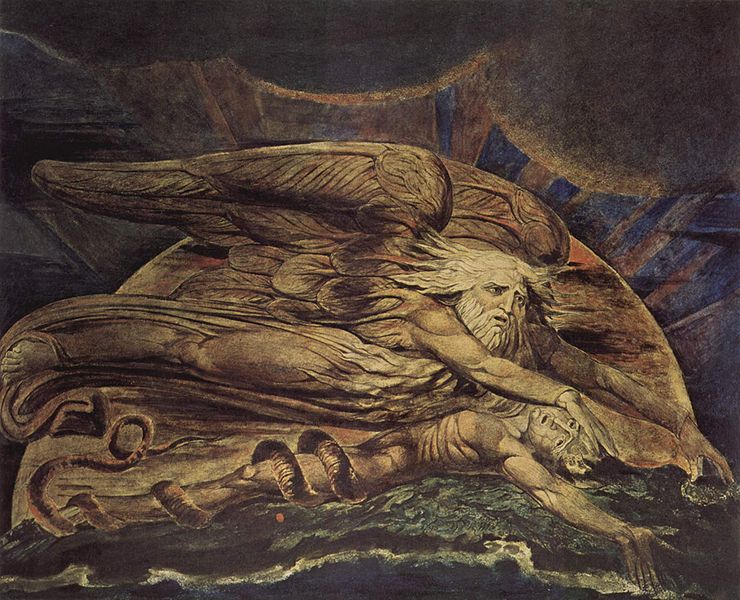
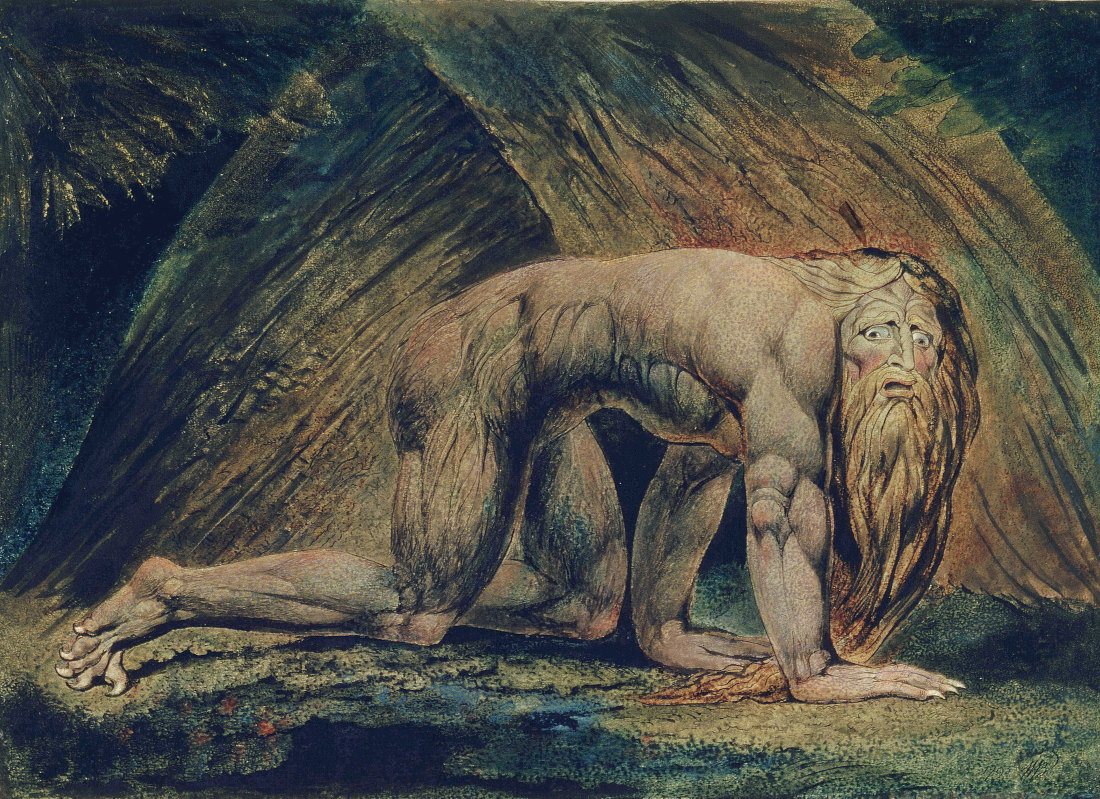
File:William Blake 008.jpg
Elohim Creating Adam - William Blake
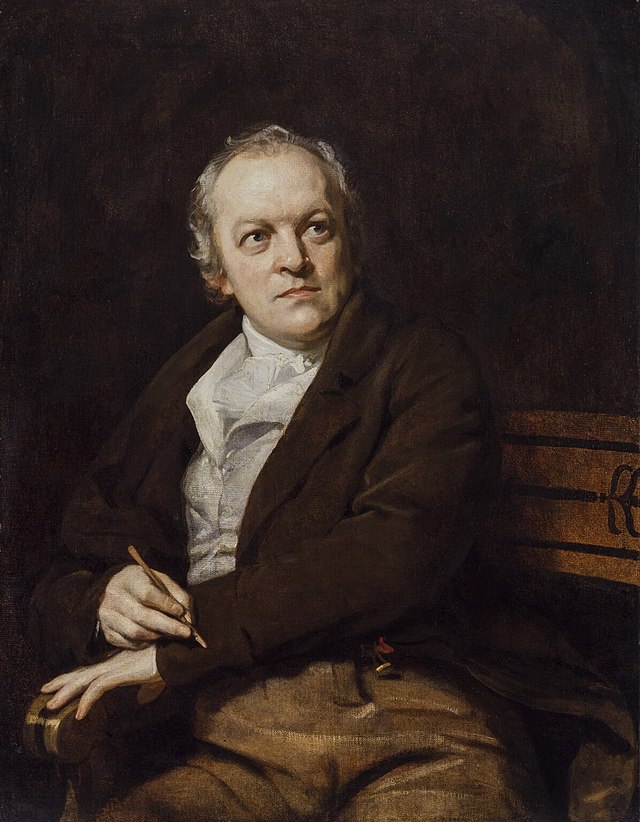
William Blake by Thomas Phillips.jpg
William Blake
"The Tyger" - Blake
  • Today we venture into a little romantic poetry. Please allow me to introduce you to my friend William Blake, author of The Marriage of Heaven and Hell. Remember C. S. Lewis' preface to his Great Divorce
    • Wrote Lewis, "Blake wrote the Marriage of Heaven and Hell. If I have written of their Divorce, this is not because I think myself a fit antagonist for so great a genius, nor even because I feel at all sure that I know what he meant."


Note to Schwager's Class

ICE Prompt review: The distinction between the devil and Keanu Reeves was to communicate that while one character was supernatural and the other natural (angel and man), the characters have qualities that can be profitably compared.  

It was not to equate Satan and Keanu Reeves.  Putting in the actor's name was just a light joke. 

ICE - Write a five paragraph essay showing how Shakespeare's Don John and Milton's Satan are fundamentally the same character, although one villain is the devil and one Keanu Reeves.


Tuesday, 2/12 - Cheeseday

  • P&P
  • Bedford 8 - Prefer active verbs
    • Read pages 146-150
    • Take notes on the rules 8a-c 
    • Do Exercise 8-1 (a-5)
  • Discuss P&P Ch 8
HW: 
  1. (Wed) P&P Ch 9-10
  2. (due block) Bedford 8 
    1. Rules 8a-c
    2. Ex. 8-1 all      

Enjoy Jane Austen? Intersted in a scholarship?

Contest:

Monday, 2/11 - Austentatious

  • P&P
  • Today is a nice day for a leisurely read in Mr. Bennet's library. If he inquires into what you are reading, just tell him you are exercising your mind and expanding your soul for the sake of your future spouse ; )
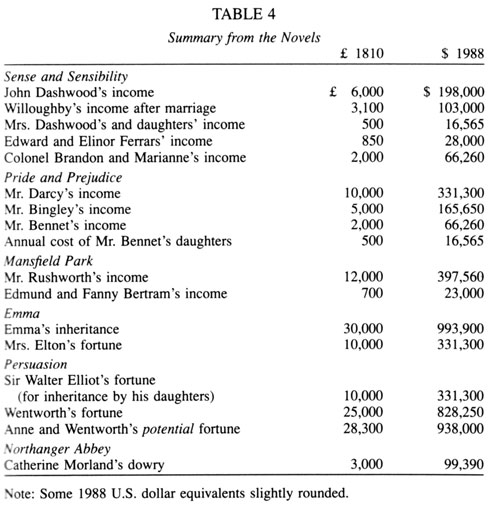
  • For those of you who are interested, HERE is a link showing the financial worth of the major players in Austen's novels. Below is a copy of the table from the article.  
  • For those interested in an illustrated book (part 1 has some poor scans, though)  


HW: 
  1. Read P&P through Ch 8, which means to finish Ch 8.
  2. Update your binder 

Tuesday, 2/5 - Cheeseday!

  • P&P
  • (Reno) Poetry Recitation
  • Check Bedford 34 PDF
  • Work on CWP and/or study for tomorrow's quiz
HW: 
  1. Quiz 
    1. Lit terms
    2. Bedford 36 (apostrophes) and 34 (semicolons)
    3. Usage - there, their, they're
    4. Restoration and the 18th Century historical overview


Extended Chapel Schedule - Mon-Wed


Monday, 2/4 - Work Day!

  • P&P
  • Any poetry recitation volunteers?
    • Schwager's class: next week's quiz
  • You may work on a couple of things during class today while we grade essays:
    • 1. Do Bedford 34 - Semicolons - guided practice (two page PDF on Focus) . . . due tomorrow.
    • 2. Begin perusing the texts we've posted to gather ideas for your CWP Q3 and begin writing if you have time. 
HW: 
  1. Bedford 34 (PDF on Focus, both pages)
  2. Prepare for poetry recitation (Herbert's "The Altar")
  3. (Wed) Quiz - another to cover the following:
    1. Lit terms
    2. Bedford 36 (apostrophes) and 34 (semicolons)
    3. Usage - there, their, they're
    4. Restoration and the 18th Century historical overview