Block, 2/27-28 - Romanticism's Flight Back to the Womb of the World

Displaying photo.JPG
8 Week old Baby Reno alive in the "Inner World"
  • P&P
  • GUM: As spokesmen of their cultures many Romantics: turned to a past or inner dream world that they felt was more picturesque more magical than the ugly industrial age they lived in. They also believed in individual liberty, and sympathized with those who rebelled against tyranny. Additionally they thought of nature as transformative; and were fascinated by the ways nature and the human mind “mirrored” the other’s creative properties.
  • Check P&P Ch. 4-8 - Discuss
HW: Read P&P Chapters 9-13 over the weekend

How to Read Poetry


  • What Is Poetry? 
    1. Poetry is "a kind of language that says more and says it more intensely than does ordinary language" (Perrine's 717).
    2. Poetry is a performance of language
    3. Poetry is participation in experience through the vision and words of another that both broadens and deepens our experience (Perrine's 720).
  • How to Read a Poem (from Perrine's)
    1. Read a poem more than once.
    2. Use a dictionary (and a Bible and handbook of mythology).
    3. Hear how the poem sounds.
    4. Pay attention to what the poem is saying.
    5. Practice reading poems aloud.
    6. Paraphrase (restate the meaning in non-poetic language) the poem.
  • Some questions to ask and answer (from Perrine's)
    1. Who is the speaker? (the character(s) talking)
    2. What is the occasion? (what is happening?)
    3. What is the central purpose of the poem? (sometimes called the "theme")
    4. By what means is that purpose achieved?


Perrine's closing comment about poetry's purpose: "Its purpose is not to soothe and relax but to arouse and awake, to shock us into life, to make us more alive" 

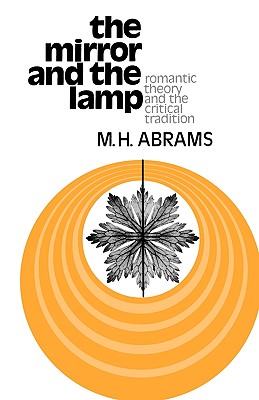
Wednesday, 2/26 - Is art a mirror or a lamp?

Reason as mirror, Imagination as lamp
  • P&P
  • GUM: Frustrated by England’s resistance to political and social change that would improve commoner's conditions the Romantic poets turned from the witty formal public verse of the eighteenth-century Augustans to a more private spontaneous lyric poetry; which expressed the Romantics beliefs that imagination rather than mere reason was the best response to the forces of change.
  • Work on P&P journal (chapters 4-8 by block).
HW: P&P Ch. 4-8 Quotes and Commentary (due block)

Tuesday, 2/25 - Remember the Revolutions of 1789/98 (French Revolution and Lyrical Ballads)

  • P&P
  • Have your Romantic era notes out for me to check while you chaw on the Big League Chew below ; )
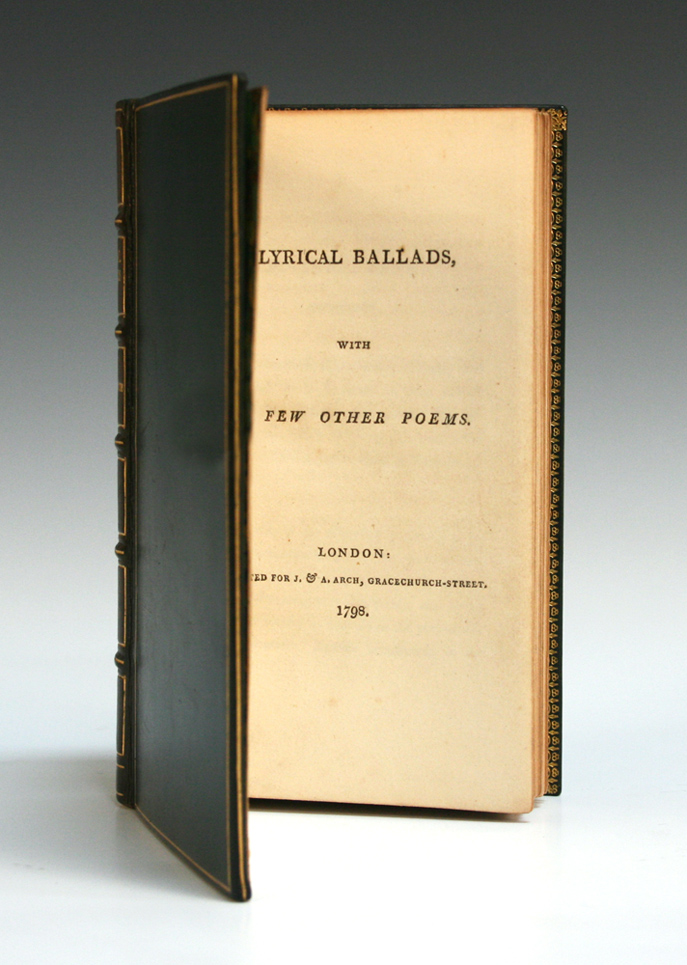
  • GUM: The 1798 publication of a collection of poems called Lyrical Ballads a collaboration between William Wordsworth and Samuel Taylor Coleridge serve as a literary marker for the beginning of the Romantic period in England: another way to date the Romantic period is to say that it started with the French Revolution in 1789, and ended  with the Parliamentary reforms of 1832, that laid the political foundations for modern Britain.
  • Discuss J13 and continue reading P&P

    HW: Hear ye, hear ye! Here is what I'd like for you to do for each chapter you read in P&P: For each of the 61 chapters (beginning with ch. 4) in Austen's Pride and Prejudice, you must select (and be ready to share in class) your favorite quote, communicating the following:
    1. The speaker(s) - is it Lizzie, Bingley, Mr. Bennet, the narrator?
    2. The context - what's happening, who's dialoging, what the quote means
    3. (chapters 4-30) Why you like the quote
    4. (chapters 31-61) Link the quote to another episode in the book or a larger theme you see Austen developing.
    Due block day of this week, read through Ch. 8 and do journal questions 1-3 above.

Monday, 2/24 - Intro to Romanticism

  • P&P
    • Wordsworth - young

  • Check J13
  • Continue reading P&P together in class.  
HW:
    Wordsworth - ancient
  1. Finish reading and taking notes on Intro to Romantic Period  

William Wordsworth (1770–1850)


P & P - Background Info

Early on in your reading, I would like for you to read the social and artistic background information that I've provided for you on Focus. See the document entitled "P and P - Background Info."

Wednesday, 2/6 - "It is a truth universally acknowledged that . . .

http://upload.wikimedia.org/wikipedia/commons/thumb/1/17/PrideAndPrejudiceTitlePage.jpg/180px-PrideAndPrejudiceTitlePage.jpg
You're not worthy! ; )
. . . a high school student in possession of a week off of school must be in want of a novel."
  • P&P
  • Your Modest Proposals
  • Now, you prideful and prejudiced male thunder puppies, get yourself a copy of Jane Austen's Pride and Prejudice and prepare to die a whimpering juvenile and rise a robust man!
    • We are going to try out an app called Subtext, the latest in interactive e-books. If you don't already have it, please get it. You must have the latest OS to do this, as I'm told. If you cannot, go to the ARC sometime over the next couple of days because I want to begin using it.
    • Once you have the app, you'll need to log in using either your Facebook account or your gmail account, the one that the school gave you. If you don't know it, then look it up or go to Student Services.
    • To join Reno's group, called English 400, you'll need the following code: IYQICHGW. 
    • Now select Jane Austen's Pride and Prejudice from the English 400 bookshelf. 
  • For the time being, please read the first three chapters of P&P and do the following journal:
J13 - First Impressions
Having just met our author and her characters, record your first impressions about the following:
    1. Mr. and Mrs. Bennet - What is your view of them based on just three chapters? Please cite at least one quote to support your view of each.
    2. Testing: please fill out the form at the end of this link
HW: 
  1. Read the first three chapters of P&P (Pride & Prejudice)
  2. J13  

Unit 6: Romanticism (and Jane Austen)

Caspar David Friedrich - Wanderer above the sea of fog.jpg
Wanderer above the Sea of Fog (1818)
  • Intro to Romanticism
    • Texts 
      • See Brit Lit - Historical Eras/Contexts (in Notability) or get it again in Google Classroom if necessary.
    • Nails
      • What/who were the major events, figures, and ideas of the Romantic Era?
      • How did poetry drastically change from the Neoclassical to the Romantic Eras? 


  • Jane Austen
    • Texts
    • Nails
      • How do inheritance laws and social class hierarchy help create the drama that is unique to Jane Austen's works?
    • Lit Terms

Wednesday, 2/12 - Testing, testing, 1, 2, 3 . . .

  • P&P
  • When you're finished with your test, please do the second half.
  • When you're finished with that, then prepare quietly until your classmates are finished with their tests. Then you may prepare for your presentations.
HW: You Modest Proposals are to be presented on block day of this week.

Tuesday, 2/10 - You must be cruel only to be kind

  • P&P
  • Study Guide: Quiz over The Restoration and the 18th century
    • All Nails and Lit terms (left column of blog)
    • GUM - go over your exercises from class
  • Your modest proposals (we will begin presentations on block day). You must include the following:
    1. Must be a Keynote presentation (or the equivalent)  
    2. Problem  
      1. Identify a particular person or people group suffering an injustice.
      2. Identify the person or group perpetrating the injustice
      3. You may not merely tackle a generic problem like "racism" or "sin."
    3. Solution (Conclusion)
    4. Premises
      1. At least four
      2. Appeals using logos, ethos, and pathos
    5. Counterargument
      1. Either concede
      2. Or refute 

Monday, 2/10 - Maudistie is the best policie

  • P&P
  • GUM: By the time of Johnson’s death in 1784 the world was changing in disturbing and profound ways the Industrial Revolution was turning English cities and towns into filthy smoky slums. Across the english channel, the French was about to murder a king and set their whole society on a different political course. The eighteenth century was closing, and--just as at the end of the twentieth century, people sensed that a new era was about to begin--people in England knew that the age of elegance, taste; philosophy, and reason; was over.
HW: 
  1. work on projects (presentations Wed)
  2. Study for quiz (on block day) 

Block, 2/5-6 - Your Modest Proposals

  • P&P
  • Poetry recitations
  • Discuss J12
  • Begin your Modest Proposals - work in the pairs that you worked in for your Don Satan assignment
The assignment: to present your own Modest Proposal
  1. Identify a real problem that affects a specific group of people in the world.
  2. Provide an outrageous and appalling solution to the problem (think of the solution as an ironic logical extension inspired by the original problem.)
  3. You must include the following:
    1. premises - at least four reasons that support the proposal
    2. conclusion - this is your proposed solution to the problem
    3. counterargument - at least one viewpoint that pushes against any of your premises or conclusion
    4. either a concession or a refutation (or both) of the counterargument
  4. Be persuasive by using logos, ethos, and pathos
    1. fabricate statistics
    2. identify multiple ways the proposal will benefit all social groups involved
    3. create fictitious "expert" testimony that supports your argument
    4. drop a reason or two that establishes your credibility, shows how concerned you are, and distances you from directly benefiting from the proposal
  5. State your target audience - Who are you poking in the eye?
    1. Remember that Swift was taking aim at England (its politicians and absentee landlords), not the Irish. Rather, he apparently bashed the Irish to help them out. Remember Hamlet's confession to his mother, Gertrude? "I must be cruel, only to be kind." ; )

Tuesday, 2/4 - You fight like a girl

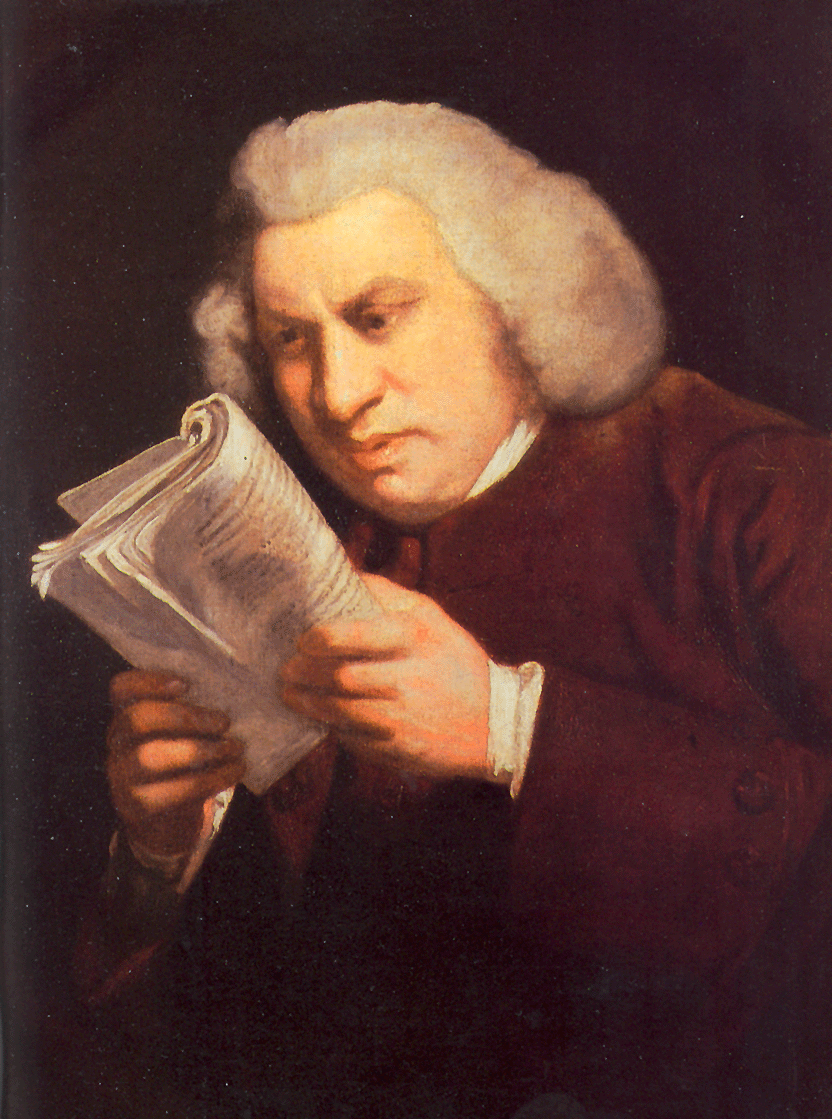
Samuel Johnson (1709-1784)
  • P&P
  • GUM: Samuel Johnson’s views of humanity were conservative and traditional. He criticizes the popular belief in progress the belief that things are getting better and better and the assumption that men and women are naturally good that is, the notion that if society is reformed, people will automatically do what is right. 
  • Finish presentations
  • Copy down nails into notes.
  • Please copy down the following Lit Terms and their definitions:
    • Premise - an assertion that supports a conclusion
    • Conclusion - the main assertion that follows from a premise or premises
    • Counterargument - an opposing viewpoint or premise
    • Refutation (to refute) - a discrediting of a counterargument
    • Concession (to concede) - an acknowledgment of the merit of a counterargument
  • J12 - Logos, Ethos, and Pathos in the Service of the Military 
  1. Identify Johnson's conclusion (his main assertion) and at least one premise that supports his conclusion.
  2. Identify at least one use of logos, ethos, and pathos (three total) in Johnson's article, explaining why each example qualifies as the particular type of appeal.
  3. Identify at least one use of logos, ethos, and pathos (three total) in Smith's article, explaining why each example qualifies as the particular type of appeal.  
  4. Does Smith address any counterarguments to his position? If so, does he concede or refute any of them? 
  5. What is the moral basis of Smith's whole argument (provide a quote that you believe sums it up)?
  6. Can you think of a counterargument to challenge his assumption? 
  7. How would you describe the tone--the author's attitude--of each essay? (Select two adjectives to describe each one)?
  8. Of  logos, ethos, or pathos, which one do you think appeals most to our culture at large today and why?
HW: (due block)
  1. Sonnet recitation
  2. Finish J12

Monday, 2/3 - Your Modest Assessments of the Modest Proposal

Another Modest Proposal for overpugpulation
  • P&P
  • GUM: Swift was appalled by the squalor and shoddiness [in art, manners, and morals] that underlay the polished surfaces of Augustan life. He felt neither smug or satisfied with the world as many English people did he deplored the corrupt politics of the time, and the growing commercialism, and materialism of the English people.
  • Take 10 minutes to gather as a group and prepare to present your findings:
    • Group 1 - How does Jonathan Swift use logos (logical appeals) to develop and support his argument?
    • Group 2 - How does Jonathan Swift use ethos (ethical appeals) to develop and support his argument?
    • Group 3 - How does Jonathan Swift use pathos (emotional appeals) to develop and support his argument?   
 HW: Study your sonnet (recitation? Block day!)