Block, 11/14 & 15 - "This bodes some strange eruption to our state"

Sir Thomas More
  • P&P
  • GUM
    • Sir Thomas More [1477–1435] and Desiderius Erasmus [1466–1536] had much in common, they both loved life, laughter, and classical learning, additionally they both were dedicated churchmen, though they were impatient with some of the Churches corrupt practices at that time and engaged in satirizing it's many faults.

  • Copy down the two new nails
  • Discuss J7
  • Read Hamlet
HW: Study for Sight Words quiz (Mon). Document is on Focus. The quiz will cover only the left column of words. 

Extended Chapel Schedule

Wednesday, 11/13 - Hamlette

http://upload.wikimedia.org/wikipedia/commons/8/89/Hans_Holbein_d._J._047.jpg
Erasmus of Rotterdam (Hans Holbein, 1523)
  • P&P
  • GUM
    • Renaissance humanists found no essential conflicts between the teachings of the Church, and those of an ancient Roman moralist like Cicero. They sought instead to harmonize these two great sources of wisdom; the Bible and the classics. Their aim was to use the classics to strengthen not discredit Christianity.
  • Continue Hamlet. 
HW: 
  1. (block) J7 - Read the assigned pages of the PDF on Focus (entitled "Shakespeare - Leithart Journals"), and answer the questions posted on the blog. See the link on the right column entitled "Journals (2013-14).
  2. (Mon) Sight words quiz  

Tuesday, 11/12 - Something Strange Is Afoot in Denmark . . . and Rotten at the Circle K

http://upload.wikimedia.org/wikipedia/commons/8/82/Sistina-interno.jpg
Michelangelo's work in the Sistine Chapel
  • P&P
  • GUM
    • Lying on his back on a scaffold Michelangelo painted: the Creation the Fall Noah’s flood and other Biblical and mythological subjects. His bright heroic figures, show individual human beings who are noble, and capable of perfection. This optimistic, view of human nature was also expressed by many other Renaissance painters and writers. 
    • Copy down new nail.
    • Let us begin Hamlet.
    HW: 
    1. J7 (due block)
    2. Sight Words Quiz (next Mon)

    Veterens Day Schedule


    First 8:10 8:55 45 minutes

    Second 9:00 9:45 45 minutes

    Assembly 9:55 10:30 35 minutes (All HS students will head for gym to attend the assembly)

    Break 10:30 10:40 10 minutes

    Third 10:40 11:25 45 minutes

    Fourth 11:30 12:15 45 minutes

    Lunch 12:15 12:50 35minutes

    Fifth 12:55 1:40 45 minutes

    Sixth 1:45 2:30 45 minutes

    Seventh 2:35 3:20 45 minutes

    Monday, 11/11 - Intro to Tragedy and Hamlet

    • P&P
    • GUM
      • The term renaissance itself is a French word meaning rebirth it refers particularly to renewed interest in classical learning which means the writings of ancient Greece and Rome it's slogan was ad fontes which means back to the font.
    • Please go to Focus and get both new documents to help our foray into the realm of "The Bard": 
      • Hamlet - Leithart Journals 
      • Shakespearean High Frequency Archaic Sight Words (what a mouthful). 
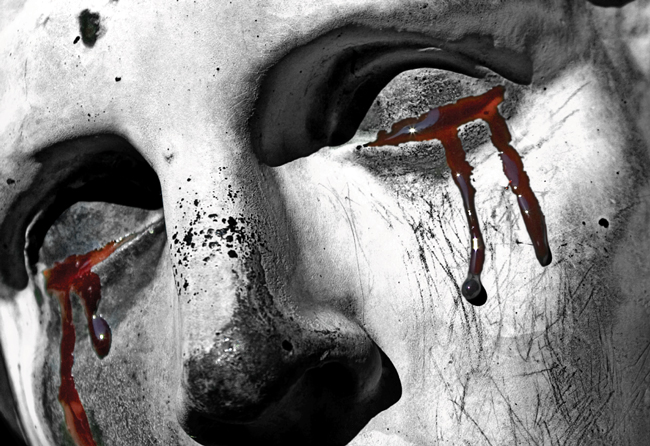
    Blinded by tragic vision
    J7 - Intro to Tragedy and Hamlet

    Read Leithart (document posted on Focus) pages 111-120 and answer the following questions:

    Introduction: Tragedy (111-113)


    1. According to the Greek philosopher Aristotle, what makes a drama a tragedy?

    2. What kind of protagonist is generally required for a successful tragedy and why? 3. List several of the ways that Shakespearean tragedy differs from Sophoclean (or Greek) tragedy.
    4. Given that the shape of Hamlet is a "Fall story," what types of characters, events, and ideas ought we to be looking for as we read?

    Introduction: Hamlet (115-120)

    5. Why is Hamlet such a popular drama?
    6. What are two of the minor textual problems in Hamlet? What is one major problem?
    7. Give two examples of the way Hamlet shows signs of compositional unity.
    8. Cite two reasons why Leithart considers Hamlet a drama that condemns the revenge ethic.
    9. Rather than viewing Hamlet as having "contradictions" and "loose ends," Leithart suggests that Shakespeare was making what profound observation?
    10. How is Hamlet healthy reading for those who live in an age "dominated by scientific idolatry"? 

    HW: 
    1. J7 (due block)
    2. Shakespearean Sight Words Quiz (next Mon) - be ready for the first half, the left-hand column. 

    Block, 11/7 & 8 - Shakespeare & Co.

      Medieval torture device? Only for the uneducated ; )
    • P&P
    • GUM
      • Historical periods the Middle Ages the Renaissance the Romantic period are historians inventions useful labels for complex phenomena.
    • Today we  meet an author whom many high school students consider a secondary teacher's medieval torture device. Not so. Shakespeare is a Renaissance author . . . so there. 
    • Read, take notes on, and discuss "Intro to the Renaissance" (please see PDF on Focus entitled "Brit Lit - Historical Eras").
    HW: Finish taking notes on "Intro to the Renaissance" and "The King James Bible" (Basically read through page 48 of the PDF that is on Focus).

    Wednesday, 11/6 - Middle Ages Quiz

    • P&P
    • Take the two-part quiz
      • When you finish the scantron section, turn in your scantron and class copy
      • Snag the second part of the test 
      • Turn that in
      • Be quiet and write a poem (no iPads; it's an experiment)
    HW: stock up on loose-leaf, college-ruled binder paper. Tomorrow we begin the Renaissance period with an overview of the period. Huzzah!

    Tuesday, 11/5 - Prepare For Thy Quiz

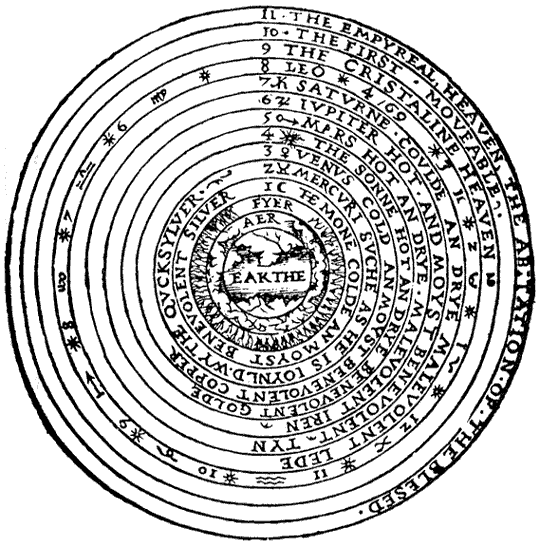
      Ptolemaic Universe
      Medieval Cosmology - The Ptolemaic universe from Andrew Borde's
      The First Book of the Introduction of Knowledge, 1542. (www.luminarium.org)
    • P&P
    • GUM 
      • At his most characteristic medieval man was not a dreamer nor a wanderer he was an organizer a codifier a builder of systems. Distinction, definition and tabulation were his delight though full of turbulent activities, he was equally full of the impulse to formalize them.

    Study Guide - Middle Ages Quiz
    1. The Middle Ages - overview 
      1. Nails (specifically the lit terms below)
        1. code of chivalry
        2. feudalism
        3. courtly love
        4. medieval romance 
        5. irony
        6. satire
        7. frame narrative
    2. Lit Terms - you are still responsible for the ones from the Anglo-Saxon period, too.
    3. Vocab - Latin Roots Lesson 2
    4. Literature - with the following works of "art," be ready to discuss how each one treats courtly love, the code of chivalry, feudal structure, etc.
      1. A Knight's Tale (with Heath Ledger)
      2. Sir Gawain and the Green Knight (see Focus for document) - this one is the medieval romance
      3. Chaucer's Canterbury Tales
        1. The General Prologue  - You should know something about all the characters we covered
        2. "The Pardoner's Tale"
        3. "The Wife of Bath's Tale"

    Monday, 11/4 - WOBT conclude

    • P&P
    • GUM
      • And therefore my dear husband I conclude That even if my ancestors were rude Yet God on high and so I hope He will Can grant me grace to live in virtue still . .
    • Discuss J6 - The Wife of Bath's Tale
    HW: Begin preparing for a Middle Ages quiz on Wednesday. We will review tomorrow in class.