Unit 1: Quo Vadimus (Where are we going?)
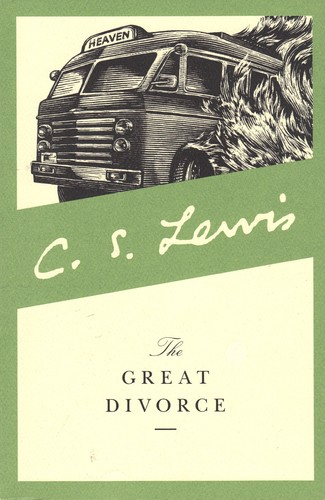
- Major Work: C. S. Lewis' Great Divorce
- Purchase the book
- Audio File
- Study Guide
- On the stage
- in San Jose (extra credit?)!
- The Great Divorce as Lewis' Divine Comedy
- Lewis-related websites
- TGD Assignments
- NAILS
- How does C. S. Lewis' Great Divorce transfigure traditional/conventional notions of heaven and hell?
- What do Lewis' transfigurations tell us about human nature?
- What are the differences between a literary analysis and a plot summary?
- LIT TERMS
- CONVENTION: A common feature that has become traditional or expected within a specific genre (category) of literature or film.
- DREAM VISION: A genre of poetry popular in the Middle Ages. By convention, a fictionalized version of the writer goes to sleep in a pleasant, natural springtime setting (May mornings being particularly popular). He has a dream that he relates to the reader. During the dream, he often encounters a mentor or spirit guide who takes him on a journey in which he encounters various historical or fictional figures engaged in allegorical activities. Through his interactions, the dreamer learns valuable spiritual, political, or intellectual truths and is transformed by the experience.
- i.e. C. S. Lewis' Great Divorce, Frank Baum's Wizard of Oz, Dante's Divine Comedy, Bunyan's Pilgrim's Progress, Langland's Piers Plowman, The Dream of the Rood,
- SETTING: The general locale, historical time, and social circumstances in which the action of a fictional or dramatic work occurs, usually established through description—but sometimes narration or dialogue also reveals the location and time.
- IMAGERY: the "mental pictures" or sensory experiences that readers encounter in literature. Here are some types:
- visual (sight)
- auditory (sound)
- tactile (touch)
- thermal (heat and cold)
- olfactory (smell)
- gustatory (taste)
- kinesthetic (movement).

No comments:
Post a Comment