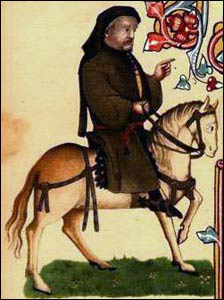
- Do you like to people watch? Most of us find the human character so peculiar that we can't help but observe, whether it be in Wal-Mart at midnight, a coffee shop in the afternoon, or first period when everyone walks in roaring and looking like a bunch of wookies (teachers not excepted). Wow. That was weird. On to Chaucer (1343-1400), "the Father of English poetry." Chaucer loved to people watch, and his diplomatic post afforded him ample time and opportunity to observe practically every type of human specimen under the Medieval sun. And he wrote about them: elevating some, loving them all, yet eviscerating a number of them--Pardoner and Summoner, anyone?--through his fiction. Before we get into his best-known work, The Canterbury Tales, let's read a quick bio of the man through whose garden of turbulence we will pilgrymage.
- The Canterbury Tales' Premise: It's spring, and twenty-nine pilgrims are making their way from Southwerk, London to Canterbury Cathedral (to visit the shrine of Thomas Becket). The thirtieth man, the host, decides to join them and to make a wager. Whichever pilgrim can tell the best story to beguile the time as they go will receive a free dinner when they return from their pilgrimage. "The Prologue" introduces the pilgrims, and tales follow. Chaucer never finished the tales, but what we have we treasure.
- The Canterbury Tales - Prologue (in Middle English)
- The Canterbury Tales - Prologue
- "The Pardoner's Tale"
- "The Wife of Bath's Tale"
As we read, please take notes in your journal. Pay particular attention to how Chaucer communicates the moral nature of his characters by how they look, act, and speak.

No comments:
Post a Comment